Search my blog

Custom Search

Contact me

koolraj003@gmail.com

Wednesday, December 29, 2010

Rajendra Prasad proof set

Rajendra Prasad proof set cover
rajendra prasad proof set cover Rajendra Prasad Proof set obverse
rajendra prasad proof set obverseReverse
rajendra prasad proof reverseComposition
rajendra prasad proof set compositionRajendra Prasad 100 rupee obverse
100 rupee rajendra prasad obvRajendra Prasad 100 rupee Reverse
100 rupee rajendra prasad proofRajendra Prasad 5 rupee
rajendra prasad 5 rupee proof In the Rajendra Prasad set we can find many errors and misprints here and there. Have a look at the following pictures for more details:
rajendra prasad error 1 1) It should be Rajendra Prasad Ki 125vin jayanti
rajendra prasad error 2) spelling of December are wrong.
rajendra prasad error

3) hyphen missing between dates

4) Should be in the past tense: kiya tha.

5)should be Bharat ki sarkar men.

6)spelling of gaon are wrong.

7)spelling of vishwavidyalay are wrong.

These are minor spelling or grammatical mistakes and there is no error on the coin. There would be no extra value for the coin set because of the error as this is not rare among the sets. (The error of Sagat Singh was a howler as the name of a national hero had been wrongly written and the production was stopped in between, and that case is rather well known by now I think). At the same time, these errors highlight the callousness on the part of the mint in the process of making these sets. Of late, they have been making a lot of sets through the year. This does put a hole in your pocket if you are a collector and looking to buy these many sets at that sort of rates. Personally, I am thinking of becoming picky on which sets to order from the mint so as to reduce the pressure on my pocket. Also, of late the sets coming from the mint are apparently compromised on the quality as the portrait on the coin lacks depth. I got one proof set in which the coating on the coin was missing/not properly done. All this makes you almost want to forget about collecting, and the interest is somewhat diminished.

Saturday, December 25, 2010

England half penny

Half penny, 1971
Weight: 1.78gm
Metal: Bronze
Diameter: 17.14mm


Half penny, 1965

england half penny 1965Metal: Bronze
Diameter: 25.5mm
Ruler: Elizabeth II
Reverse: The Golden Hind

The Golden Hind was a galleon from England which was primarily known for its circumnavigation of the world under Sir Francis Drake between 1577 and 1580. It was known as the Pelican at first, but Drake renamed it mid voyage in 1978 as it entered the Magellan Straits to compliment his patron Christopher Hatton, who was the lord counselor and favorite of queen Elizabeth I of England. Chritopher Hatton had a golden hind(female deer) as his armorial crest.

After Drake's voyage, the ship was maintained at Deptford for public viewing, making it perhaps the first example of a historical ship being shown to public. The Golden Hinde remained there for 100 years until it eventually rotted away and was broken down.


Half penny, George V 1919
england half penny 1919 george vMetal: Bronze
Diameter: 25.5mm
Reverse: Britannia seated
Ruler: George V

Wednesday, December 22, 2010

UNC set: First war of independence

"partaap Ne Jaan De Di Vatan Pe shivaaji Ne Bhagava Udaaya Gagan Pe maradon Ne Khaayin Aazaadi Ki Kasamein ada Auraton Ne Ki Jauhar Ki Rasmein kafan Baandh Kar Raani Jhaansi Pukaari ye Desh Aazaad hoke rahega  siraaj Aur Tipu Zafar Aur Naana tha Har Ek Inamein Qaumi Divaana yahaan Le Ke Aaye Bagaavat Ki Aandhi tilak Neharu Aazaad Netaaji Gaandhi bhagat Sinh Ki Raakh Ne Pukaara ye Desh Aazaad hoke rahega"


First war of independence UNC set cover
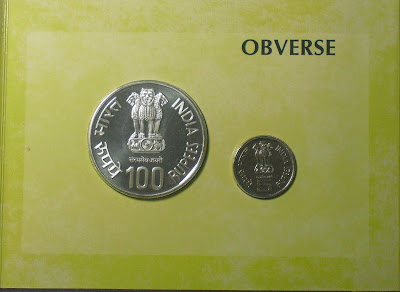
first war of independence coverObverse
first war of independence obverseReverse
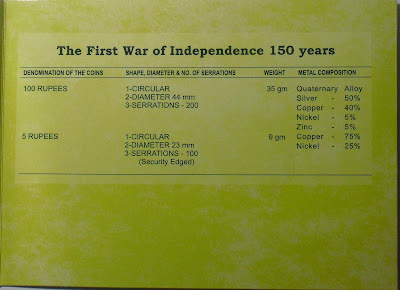
first war of independence reverseComposition
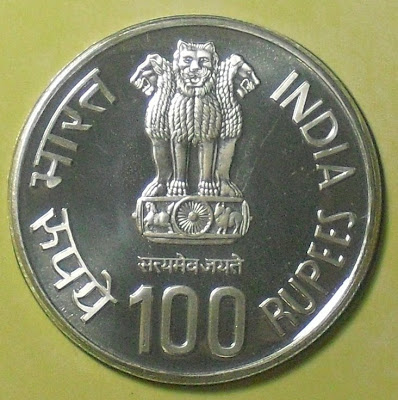
first war of independence composition100 rupee obverse
first war of independence 100 rupeeFirst war of independence 100 rupee reverse
first war of independence 100 rupee revFirst war of independence 5 rupee copper-nickel
first war of independence 5 rupee copper nickelThis set was released on the completion of 150 years of the first war of independence. The reverse shows two persons firing a cannon at the bottom and some warriors on horseback flanked by the figures of Bahadur Shah Zafar on the right and Tatya Tope on the left, who were two major cogs in the wheel of the war. Bahadur Shah zafar was the last Mughal emperor. He was the ruler of Delhi and was also the weakest link in the revolt. The East India company made its arrival in India in the time when Mughal emperor Jahangir reigned, at around 1616 AD. They came originally as traders, but slowly and steadily kept expanding their power and influence. Their aspirations and desires grew in India and one by one, they started to take over different princely states and sultanates through various means like agreement, deceit, and also conquest. Many states were taken over through the doctrine of lapse, which stated that any adopted heir was not recognized as a legal heir, and the rulers like rani Laxmi Bai of Jhansi thought of this as an interference in the traditional inheritance policy.In some cases the local princes were not accepted as the rulers because of being underage and were killed, like Birjis Qadar of Awadh/Oudh. Unrest grew among the princely states as one by one the British were taking over the rule from the princes. Most of the practices followed by the British were also not acceptable to the devoutly religious Indians. One such practice was the rumored use of pork and beef in bullet cartridges in the enfield rifles that were given to the Indian sepoys in the British army. Pork is anathema for Muslims and beef is taboo for Hindus. So Muslims and Hindus both were agitated by the British rule and practices. In march 1857, Mangal Pandey refused to bite off the cartridges from the enfield rifles that were provided to them and this was the trigger in the outbreak of the revolt, which had been brewing for quite some time. One by one, the different states declared war on the British during that year only. Eminent leaders in the war for independence from British rule included rani Laxmi Bai of Jhansi, Tatia Tope, Bahadur Shah Zafar, Tipu Sultan, Rani Chennamma, begum Hazrat Mahal, Nana Saheb Peshwa and the 80 year old Kunwar Singh of Bihar. Most of the revolt was on the part of the aristocracy who were highly insecure because of their reign being taken over by the British. The participation on the part of the zamindars, taluqdars and the peasantry was very limited.

Mangal Pandey's fellow regiment men refused to arrest him, but he was unable to ignite an open rebellion. He tried to fire himself with his musket for his failure, but only wounded himself. He was later court martialled and hanged. The fallback of the rebellion started by Mangal Pandey was that it was not organized revolt, everyone declared war one by one. Had the revolt broken out in a coordinated manner, the British would have had a tough time. Another reason for the failure of the revolt was the non-participation of various factions like the Sikhs and the Pathans of North West Frontier Province and Punjab. Most people believe that this was because earlier the British had conquered Punjab only because the British had got inside help from Purbias(Bengalis and Marathis- Easterner), and the sepoys were despised far more than the British by these communities at that time.

So as a foregone conclusion, the revolt was crushed and every involved person had to face dire consequences. A no prisoner policy was adopted and mass executions were carried out with muskets , and also a large number of people were bound to cannons and blown to pieces, like with the Namdhari Sikhs. Bahadur shah Zafar was exiled to Rangoon where he died later. Many leaders were blown by cannons, and there was large scale massacre. Women were spared but the men and the children were heartlessly killed. We are talking of civilians here, who did not take part in the revolt. Shockingly, the brutal aftermath of the reconquest was approved and also lauded of back in England as some accounts said the orientals were uncivilized and had done wrong to the Europeans there , and that several young European girls were raped by them. Still , some people in the British army themselves did not approve of the inhuman and savage acts of suppression. People like Karl Marx have pointed out that the accounts of Indians acting as uncivilized and brutal people were biased , and in some cases, the person giving the account was not even present at the mentioned event.

The conclusion of the revolt of 1857 was that there was mass, brutal suppression and the Crown of England, at that time Queen Victoria took over the reins of colonial domination, and she became Empress Victoria.

See also: First war of independence proof set

Sunday, December 19, 2010

England 1 penny - II

1 penny, 1913
england 1 penny 1922 george VMetal: Bronze
Diameter: 30.8mm
Ruler:George V
Reverse: Britannia seated


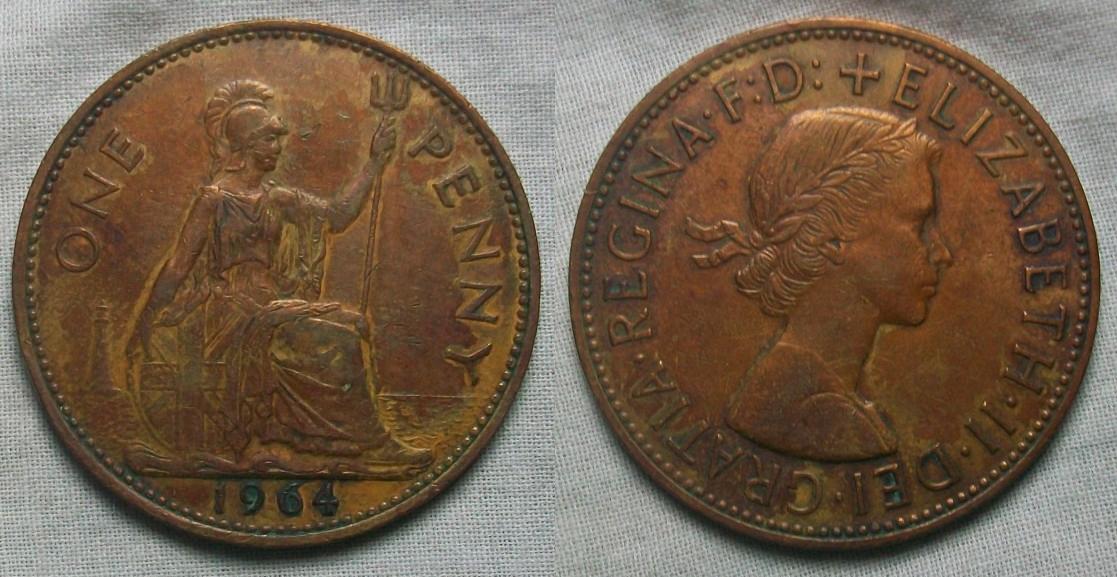
1 penny, 1964
england 1 penny 1964 elizabethMetal: Bronze
Diameter: 30.8mm
Ruler: Elizabeth II
Reverse: Britannia seated

Britannia is an ancient term for Great Britain, and also a female avatar of the country. The Roman empire began its conquest of Great Britain in 43 AD,they established a province called Britannia. The group of islands of and around Britain were called as Britannia on the name of the Roman colony. Later on Britannia came to be used for Britain alone, and the Celts were called Britons. Britannia was personified as a goddess armed with a shield and spear in the 2nd century, and this name and symbolism survived the withdrawal of the Romans in the fifth century.


1 penny, 1996
england 1 penny 1996Reverse shows a portcullis, an old gate used as a last line of defence in fortresses.

Thursday, December 16, 2010

England 1 penny - I

A portcullis
portcullis 1 Penny, 2005
england one penny 2005
The old design of the one cent features a crowned portcullis flanked by chains on the obverse. A portcullis is an old fashioned gate, made of wood, metal or a combination of the two and often used for fortification of some entrance, most often to a fort. The portcullis moved by gliding up and down and was in the form of latticed bars. We had a sliding rope over pulley mechansim for pulling up the gate. It was the last line of defence during the time of an attack or siege. The gate closed very rapidly by falling if we let the rope be free. There was usually a double portcullis system for the entrance, and when some attackers came, the gate on the inside was closed first, and then the gate on outside was closed, trapping the enemy within. Then some hot sand could be poured on the enemy from the roof above,and there were also arrow slits so that archers or crossbowmen could quickly eliminate the enemy.

The crowned portcullis is shown here as it is a symbol of the British parliament.


1 Penny, 2008
england 1 penny 2008The new one penny coin is from the new set of coins to be designed by Matthew Dent, who was the winner of a public desigining contest opened by the government for the design of the new coins. The reverse shows a section of the royal shield, and it is said that when all of the coins in the new set are placed together, the shield is re-formed.

Tuesday, December 14, 2010

Thailand 50 Baht - Naval Cadet Academy

50 Baht: 100 years of Naval Cadet academy cover
thailand 50 baht 100 years naval acdet academy
thailand 50 baht 100 years naval cadet academy50 Baht : Naval cadet academy obverse
thailand 50baht 100 years naval cadet academyReverse
thailand-50baht-100years naval cadet academyThis 50 Baht coin was released on the occasion of 100 years of the Thai naval cadet academy. The year written on the coin is 2548BE which converts to 2005 AD. The reverse shows the logo of the royal naval academy of Thailand, established by king Chulalongkorn in 1898.

Sunday, December 12, 2010

Isle of Man - world's first pyramid coin

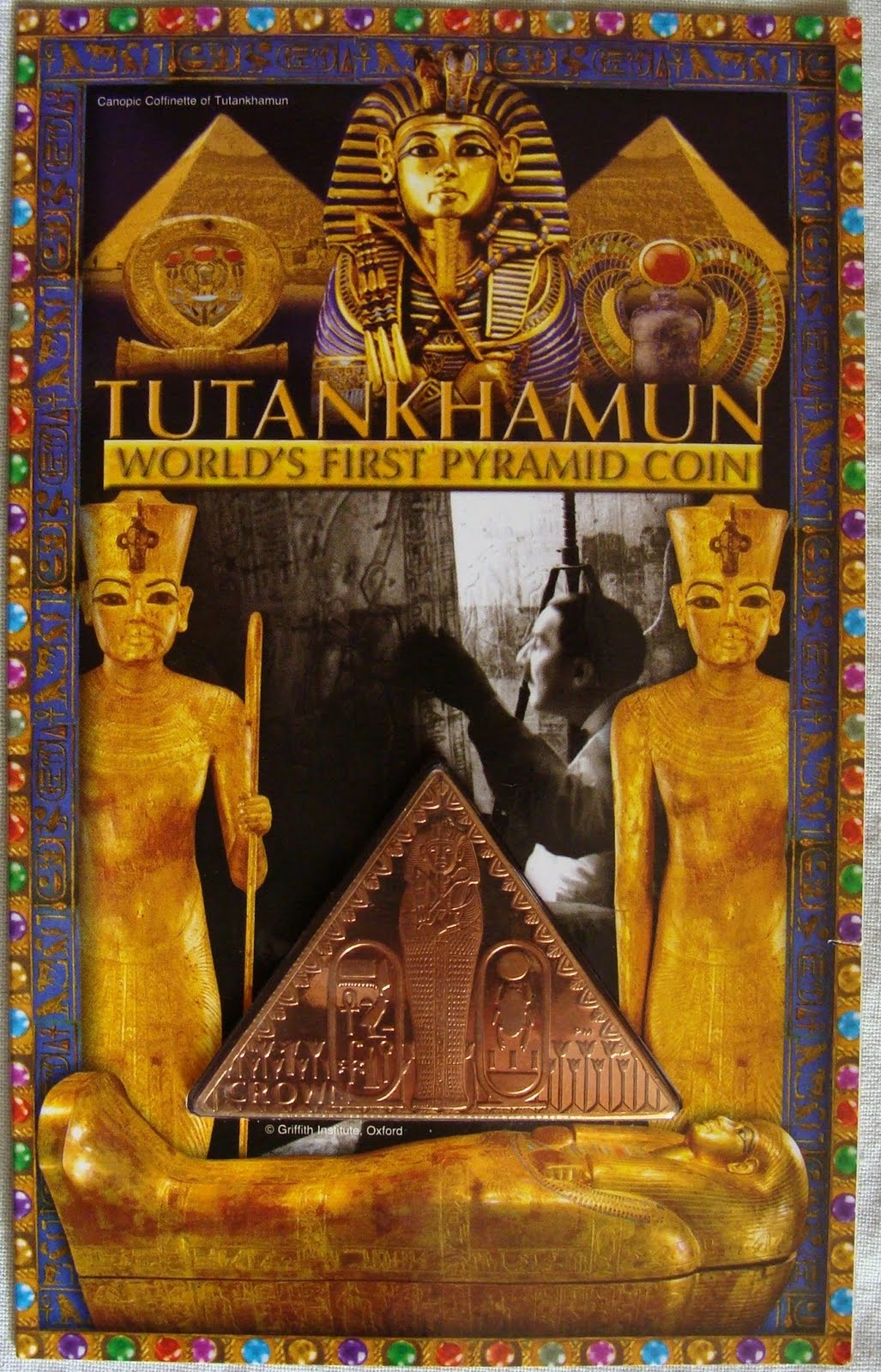
World's first pyramid coin Cover
isle of man world's first pyramid coin 1 crownThe cover shows Howard Carter, the Englishman who discovered and played a major role in the excavation of king Tutankhamun's tomb almost 100 years ago. Tutankhamun's tomb had a large number of treasures, both archaeological and otherwise intact as the tomb had not been found by grave robbers through the centuries.
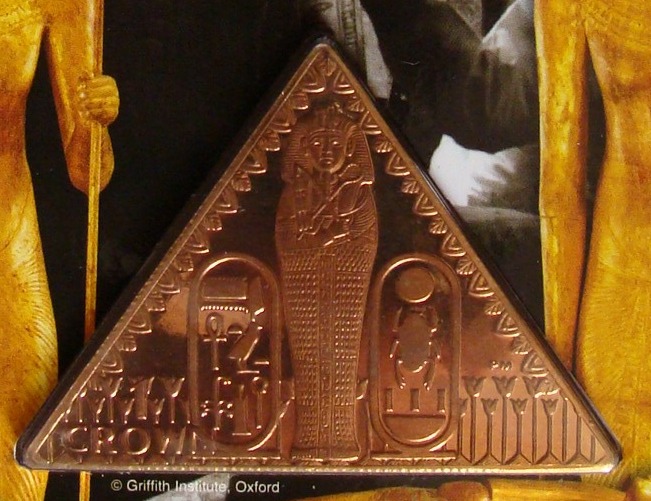
isle of man world first pyramid coinIsle of Man 1 Crown (First pyramid coin)
isle of man world first pyramid coin 1 crown
isle of man pyramid coin 1 crownThis Isle of Man 1 Crown is made of copper and is touted to be the first ever pyramid coin. The shape is actually not a pyramid but a rounded triangle, and it has the theme of the pyramid of tutankhamun, the most famous Egyptian ruler who died at the young age of 13. The design includes various symbols taken from the pictorial language of ancient Egypt which can be found engraved in the pyramids, and the obverse also shows a mummy, something which has always been associated with the pyramids. Minted in 2008, this one has queen Elizabeth II as the ruler. This one was released by the Pobjoy mint, which is also Europe's leading private mint and produces legal tender as well as medals and tokens for various governments and banks throughout the world. The Pobjoy mint is located in Surrey, England.

Wednesday, December 8, 2010

Armenia Dram - II

10 dram, 1994
armenia 10 dram 1994Weight: 2.3gm
Metal: Aluminium
Diameter: 28mm


20 dram, 2003
armenia 20 dram 2003Weight:2.8gm
Metal: copper plated steel
Diameter: 20.5mm


50 dram, 2003
armenia 50 dram 2003Weight: 3.45gm
Metal: brass plated steel
Diameter: 21.5mm


Armenia coat of arms
armenia coat of arms
The Armenian coat of arms consists of a lion and an eagle on a shield. These are ancient symbols taken from the first Armenian kingdoms dating back to before the birth of Christ.

The shield itself consists of many symbols, with the one at the centre being mount Ararat with Noah's ark on its top. Noah's ark is said to have landed on the top of mount Ararat after the great flood. Ararat is considered to be a national symbol of Armenia. The two eagles looking at each other(bottom left) symbolize the length and breadth of Armenia. In the upper left, we can see a lion with a cross, which was the symbol of the Bagratuni dynasty, which was later destroyed by the expanding Byzantine empire. In the upper right, there is a two headed eagle, symbol of the Arsacid dynasty, the first dynasty of a Christian Armenia. The last symbol is again a lion with a cross, symbol of the Rubenid dynasty, which prospered in the 12th and 13th centuries until the Mamelukes and Turks overtook it.

The lion and the eagle were chosen because of their power, wisdom, courage, patience and nobility among the animals.

Sunday, December 5, 2010

Armenia dram - I

100 dram, 2003
armenia 100 dram 2003Weight: 4gm
Metal: nickel plated steel
Diameter: 22.5mm
Obverse: national coat of arms


200 dram, 2003
armenia 200 dram 2003Weight: 4.5gm
Metal: brass
Diameter: 24mm


500 dram, 2003
armenia 500 dram 2003Weight: 5gm
Metal: bimetallic copper-nickel centre in brass ring
Diameter: 22mm
Edge: segmented reeding
Obverse: national arms

The Dram derives its name from the Greek Drachma, one of the earliest copper currencies. The name Dram has not been conjured overnight as we had a currency called Dram from 1199 to 1375, when silver coins called Drams were issued in medieval Armenia. Rubles were used in Armenia until the break up of the USSR in 1991. The Dram came to be used as a currency in 1993 which had an exchange rate of 200 rubles to 1 Dram (or 14.5 Dram to 1 US$).